Episodes

2 days ago
2 days ago
43 min
A live recording from The Big Romance about a 2008 Sub Pop-released classic album of the 2000s.
Listen on Apple | Android | Patreon | Pocketcasts | CastBox | Stitcher | Spotify | RSS Feed | Podlink
Step into a world of misty melodies and cavernous echoes with Seattle band Fleet Foxes’ landmark debut – a defining record of the late-2000s indie folk revival. Led by Robin Pecknold, the album blends the lush, pastoral harmonies of the 1960s with a haunting baroque-pop sensibility and lyrical themes rooted in nature, tradition, and introspection. Like the Bruegel painting on its cover, every track reveals a dense, beautiful world that evokes a timeless – almost mythic Americana sound.
This podcast episode is a live recording from our listening party in The Big Romance in April, with guest journalist and Fleet Foxes fan Aoife Barry.
Our next Listening Party is Smashing Pumpkins later this month and it's sold out.
Listen Closely: Fleet Foxes – Fleet Foxes (2008)
A Nialler9 listening party, hosted by Niall Byrne with guest Aoife Barry.
Before the album
Niall: Hello everyone, how are you? Welcome to the Listen Closely album listening party. I'm Niall, and this is Aoife Barry.
Aoife: Hello.
Niall: We're here tonight because Aoife picked this album, as she has before. You picked Jeff Buckley last year.
Aoife: Yeah, and we ended up doing three of them.
Niall: We did, we went to Cork. We did two here and then we went to Cork to talk about Jeff Buckley. And you were at the My Bloody Valentine listening party last year as well, back in October.
Aoife: It must have been October, yeah.
Niall: Well, obviously we're here for a very different album tonight: Fleet Foxes by Fleet Foxes, from 2008. As you heard there, we played a bit of the Sun Giant EP by the band, which came out a few months before this album, because we want to give the album its full due. They're a little different, and we'll talk about that. But yeah, you picked the record.
Aoife: I did. I obviously must like it. And it's such an incredible record. Is there anybody here who hasn't heard it? That's really exciting, if so. I'm excited for you to hear it. You got a sneak peek there of what the vibe is going to be.
I picked it because I love this record, but I also had a funny story about how I first heard them. Back in 2008, when this record came out, I'd read about this band called Fleet Foxes in a music magazine. I don't even think I'd heard a song yet, this is back in the day. And I was on holidays in Berlin, and in the tiny little hostel we were staying in, they had a sign up on the wall: "Who's playing tonight? Fleet Foxes, Café Zapata." I said to my boyfriend, "I think that's a band I read about in the magazine, will we go see them?" And he was like, "Grand." So we went, and they were unbelievable. It was so good. Beach House were supporting them. So it was 2008 smacking you in the face.
Niall: Come on.
Aoife: And I took photos, which I found. I have photos. Artifacts. One is terrible, the other one's not so terrible, taken on one of those little Canon digital cameras. And I still have the ticket, I kept the ticket, I'm one of those hoarders who keeps all their gig tickets. But it was so good: the venue they played in had a dragon that breathed fire out every fifteen minutes.
Niall: So they'd be playing and this dragon…
Aoife: I'm not even exaggerating. Fire would just shoot out of this mechanical dragon. It was so Berlin. And Fleet Foxes were so stunning, and Beach House were so stunning. I love Crosby, Stills, Nash & Young, I love all those harmony vibes, I wish I was born in the seventies, sadly I was not. So I fell in love with them immediately, and I've been a big fan ever since. Although I'll say I probably dipped a little bit around the Crack-Up era, their third album, but then I saw them when Shore came out, their most recent album, and fell right back in love with them.
Niall: We're going to talk about all the albums that come afterwards, but we'll start with this one, because this is presumably your favourite, or one of them.
Aoife: Shore is up there as well for me, but yeah.
Niall: So what was it about Fleet Foxes at the time? For context: in 2008 there was quite a lot of this kind of music around. We previously did Bon Iver's For Emma, Forever Ago as a listening party, and the funny thing, which I only found out when we did this, is that they have the same origin story in a way. Both songwriters went to a cabin in the woods to pour their heart out and write the songs.
Aoife: I think Justin Vernon just got there first in terms of the marketing.
Niall: So they must have pulled back on talking about it too much, because it's basically the same thing. They never really talked about Robin Pecknold's writing process in those terms.
Aoife: For Emma was such a massive moment, everybody was obsessed with this guy who broke up with a girl and went to a cabin and wrote a record about it. It was the ur indie-folk album.
Niall: What was really appealing about Fleet Foxes is that they were so young, between about twenty-two and twenty-seven, and Robin Pecknold was twenty-one when he wrote the record. Which is frankly offensive, you shouldn't be allowed to be so talented at twenty-one.
Aoife: I know. And they were clearly these people from Seattle, which we associate with grunge, and then it becomes this place where they're bringing out all the pastoral, outdoorsy, mountain-and-sea vibes of the Washington area. They're obviously really influenced by the seventies too, by Crosby, Stills, Nash & Young, by Laurel Canyon, but also by Appalachian folk. There's a real purity to what they're doing. The harmonies are unbelievable, there's even a bit of a gospel feeling. So these young guys made this album that was being called an iconic American record on release. The Guardian called it a landmark American album, something like that. And that's special, because you don't get that many records immediately being called landmark.
Niall: It was a very exciting time for music around then. I actually brought some records. We mentioned Beach House and Teen Dream earlier, that's a bit later, 2010. I wanted to do a listening party for that at some point, that'd be good craic. Around that time you had Animal Collective and Panda Bear, Person Pitch was right there, that was the apex for that very experimental scene. A few years later we had Sufjan, our very first listening party. And Bon Iver, of course. There's also stuff like Neutral Milk Hotel very much of that vibe.
Aoife: I've noticed people covering Neutral Milk Hotel more now.
Niall: I think when we got to it, it was on its second go-round, and now it's getting a third, which is great. It's a great record. So, the band were from Seattle, they had a bit of the scruffy flannel-shirt look, but obviously didn't sound like that. The album was written in the woods, in the cabin, brought to the band, and recorded with Phil Ek.
Aoife: Who did a lot of stuff with Built to Spill.
Niall: Yeah, and he worked with The Shins, and Modest Mouse, a really long history.
Aoife: Are The Shins from Seattle as well?
Niall: I think they might be. Band of Horses is another one. So they recorded it themselves with Phil Ek, paid for it all themselves, and then the local major independent label Sub Pop came calling. Obviously known for a lot of grunge traditionally, but they'd clearly been releasing this kind of music around then too, The Shins had been on the label for a few years, Band of Horses. When it came to it, they signed to Sub Pop. Apparently there was a bidding war.
Aoife: They'd become quite popular on MySpace. Anybody remember MySpace? Every time I do one of these I feel older and older, mentioning the top eight, the randomers you'd put in your top eight. Word could spread quite quickly once you got popular on MySpace.
Niall: What I thought was really interesting, that I discovered when I was researching, is that recording the album was actually a total pain for them. They didn't have much money, so they ended up recording a lot of it in their houses, or in Robin Pecknold's family home. And he re-did all the vocals right before they mastered the record, because he'd been sick during the initial sessions and his voice wasn't in great shape. They recorded it all in one go, scrapped that, did another version, and kept moving the running order around. I'm always fascinated by albums where the creation was a total pain and they had no idea it would even work out. Robin Pecknold actually said, "I hope nobody cares about this album, because I just want to move on to the next one." And then it becomes this iconic record.
Aoife: Isn't every artist sick of their album by the time it's done? You're like, "my paintings." Yeah.
Niall: 2008 was an interesting time for it to land. The album draws on the Beach Boys and Brian Wilson, Crosby, Stills, Nash & Young, Nick Drake, Simon & Garfunkel, Fairport Convention, Judee Sill, very much old-timey or sixties folk and pastoral stuff. And in 2008 there's a financial crash. The album was worked on before that, but it was released into that environment, and a lot of this music seemed to catch. When things go bad, we retreat, we dream, we listen to music that's maybe the opposite of what we're feeling. There was a gentleness, an unhurriedness to it that resonated.
Aoife: Grizzly Bear is another band from that time. When Jay-Z and Beyoncé went to see Grizzly Bear in Brooklyn, that was kind of where all the indie music peaked.
Niall: And the other part of it, which I was involved in, was the MP3 blogs, that's where you'd hear this music. Especially the American and Canadian stuff, no one was promoting it over here yet, so you'd be months ahead. You'd hear Fleet Foxes in these MP3 formats. That was a mad period, it showed how the internet could collapse geography, a song could spread really quickly on the blogs.
And in an American context, this came out post-Bush, with the Obama era coming in, a more hopeful tone. You had the Lehman Brothers crash, these global pressures, and then these hopeful times too. It's interesting to wonder whether these albums are a reaction to it, or whether they appeal to us because we want nice, happy things. I feel like Fleet Foxes have so much emotional depth: there's yearning, sadness, hope, nostalgia.
Aoife: I loved Yellow House by Grizzly Bear, their first record, a complex, complicated, almost jazzy thing that sounded beautiful but had a lot going on. We weren't going for simplistic music, but we wanted music that gave us depth and beauty. Is art a solution to the world collapsing?
Niall: We could be answering that in 2026. We live in a cursed timeline, as I keep saying. That's all I'm going to say. But what else happened in 2008 in the wider circle of music? Portishead returned with Third. TV on the Radio released Dear Science. MGMT released Oracular Spectacular, 'Kids' and all that. Cut Copy released In Ghost Colours, Indie Sleaze night on Saturday, folks, come on. Kanye put out 808s & Heartbreak, that was November that year. Rihanna was at the peak of her powers.
Aoife: Katy Perry appeared that year. And 'American Boy'.
Niall: 'American Boy', still one of the best pop songs, fire. Iron & Wine was the other one I forgot to mention. So it was a really vibrant, varied year. As you heard, there's the Sun Giant EP too.
Aoife: The thing about that is it came out before the album, but was recorded after. The album was done, in the bag.
Niall: They decided to go into the studio and record Sun Giant, a collection of songs intended to sell on tour. It ended up being quite popular, and for a lot of people it was their first time discovering Fleet Foxes.
Aoife: It wasn't like The Coronas' 'San Diego Song', their summer-holiday anthem, or anything like that. But it came out before the album, and then the album arrives.
Niall: So what was the reaction at the time? Was it immediate?
Aoife: Things happened really quickly. In January that year they got all the MySpace attention, and by June the album was coming out. Really, really quick. There was so much chatter about them, which is partly why I'd seen the name, and a music blog like yours would have seen it too, and known they were one of the big bands. In a way that's harder now.
Niall: These days you see bands like Geese getting a lot of attention because they use companies that help them go viral. You didn't really have that then. Now you'd dress yourself up in some gimmick, polka dots, whatever, and go viral all over the internet for it. I couldn't imagine these lads doing that.
Aoife: No. But maybe in a way they were cosplaying living in the forest, on the Puget Sound.
Niall: Anyway, when the album came out, people loved them, and it really hit it off. Because they sound so seventies, your parents would love the records and you'd love the records. There's almost a lullaby quality to the folk stuff too. The music is applicable to anybody of any generation, and there's something lovely about nostalgic music that reminds you of a better time.
To finish on that point: I think there's something very mysterious about Fleet Foxes, they feel out of time. They're these young, scruffy lads with the beards, but there's a mystery to them. They didn't come across as the hipster end of things, they weren't leaning into anything. They were presented as the kind of band that wouldn't have had phones, would have lived off-grid, which is funny because they were a MySpace band. They're the most un-MySpace band you can imagine. Surprise people, do something a bit different, don't be exactly what people want you to be, and they'll love you for it. And then your songs are unbelievable too, soaring and stunning.
Can we talk for a second about the cover? It's an original painting from 1559 by Pieter Bruegel the Elder, Netherlandish Proverbs. It depicts a densely populated Flemish village scene illustrating 126 folk proverbs. There's a lot there. Some on this side are cut off, but for example, this woman here, she's putting the blue cloak on her husband, meaning she deceives him. This guy is casting roses before swine, wasting effort on the unworthy. And right at the top there's a man running through a field with his arse on fire, chasing pigs, "he who eats fire craps sparks," do not be surprised at the outcome if you attempt a dangerous venture. There are 126 of those.
Aoife: The interesting thing is that the band managed to get permission to use it. Really unusual to be allowed use it as commercial artwork.
Niall: And apparently the museum that holds the artwork were delighted. A lot of stars aligned for them. It's an iconic cover because it's so different from what anybody else was doing, clearly of a particular period, and it has that Where's Wally quality. I have a quote about it. Robin said: "We were trying to figure out what we wanted to do, and my brother had been working some stuff out, when I saw this Bruegel painting in a book my girlfriend had. I liked that it had a really intriguing meaning, there's a story to each little scene, which felt fitting for the record. It was dense but unified, not a collage. It has a Where's Waldo quality, something you could look at for a long time on a vinyl sleeve and keep finding new little things. It was very easy to get the museum in Berlin that has it to say yes, they were super excited the band wanted to use it, and put it in their newsletter. When you open it up, on the inside there's a Paisley pattern traced from the back of a book that Skyler's mum got me. We wanted two very different feelings."
So, what to look out for when we press play very shortly?
Aoife: When I was going back to this, I had it in my head that every song was one of these big songs, because there are so many big moments. But actually there are two tracks that are pretty much acoustic, so it's interesting to notice how they go from the big sound to the small. And for me they're a real emotion-and-feeling band, so notice how you feel listening to it. I always feel this swell of emotion with Fleet Foxes, I was walking down the road listening to Shore and I was like, my God. So lean back and feel into the emotions they're bringing you. And listen to the lyrics if you can make them out, because they're so out of time, all about pack horses and this amazing imagery. Robin Pecknold said he didn't write about a lot of personal stuff because he didn't have enough life experience yet, so instead he wrote these beautifully poetic narratives about pastoral and rural life. So I'd say the lyrics and the feelings are the two things.
Niall: Track two, 'White Winter Hymnal', is probably the biggest one, watch out for that. And a few other people thanked and cited as influences, for some extra context: Brian Wilson, Joanna Newsom, Bob Dylan, Noah Lennox and all the lads from Animal Collective, Levon Helm and Robbie Robertson of The Band, Blitzen Trapper, who they toured with at the time and who were bigger than them then. For some reason Joni Mitchell and Neil Young are listed together, which is fair enough. Marvin Gaye, Damien Jurado, Paul Simon and John Lennon listed together. Townes Van Zandt, a legend. Vashti Bunyan, and Van Morrison.
There's a nice quote from Robin Pecknold I'll read afterwards. Let's just open it up and listen. I'll play it at full volume, it's about thirty-nine minutes, two sides. Close your eyes, whatever you want to do, vibe away in your own way.
[The album plays: Fleet Foxes – Fleet Foxes, 39 minutes.]
After the album
Niall: It's quite an economical album, isn't it? It doesn't stick around long, thirty-nine minutes.
Aoife: I like an economical album. It's also one of the first fairly short records we've done here.
Niall: That's part of why I was thinking about Sun Giant in that context too. I'm going to read a bit from the liner notes, because for an album that's very much about feelings, with only a few direct songs, some of what's written here is interesting:
"My first memory has always been of me and my mom on a cold grey day down at some beach in Washington, along the Puget Sound somewhere near Seattle. I would be around two or three years old, and we were with a friend of mine from the neighbourhood and his mom, walking among the driftwood looking for crabs. Even now I can remember the smell and temperature of the air, the feeling of the sand and the swaying tall grass. I can even remember looking over at my friend and how his face looked when he smiled back at me.
Another memory I'll sometimes recall as my first is dressing up in the dead of summer as Jack London, with tennis rackets on my feet and wearing my dad's hiking pack, after seeing Disney's terrible version of White Fang. Or the memory of stealing my neighbour's Big Wheel and riding it halfway down the block before getting caught and having to turn around defeated. Or wearing a fireman's outfit while washing my parents' car, or eating an orange popsicle from the ice cream truck. These have always been some of my most distinct and persistent memories of childhood.
So it came as a disappointment when, one day as a teenager, I opened up a photo album and found pictures of each and every one of these memories. I didn't have a single memory that didn't belong to, or somehow grow from, those pictures my parents had. I guess I've seen all these photographs at some point, forgotten they were just photographs, and over time made them into my most tangible memories. That's scary to me in a way.
This leads me to something weird about the power music has: its transportability. Any time I hear a song or record that meant a lot to me at a certain moment, I'm instantly taken back to that place in full detail. Whenever I hear 'Feel Flows' by the Beach Boys, I'm taken straight to the back of my parents' car on the way to my grandparents' place, with Surf's Up in my Walkman and the Cascade Mountains going by in the window. Any song off Radiohead's Kid A brings back the airport near Seattle, from when we were on the way to Colorado for a wedding and Kid A was the only record I brought or wanted to bring. 'Crayon Angels' by Judee Sill is the whole winter of last year. And Brian Wilson's solo version of 'Surf's Up' takes me back to driving my parents' car around town alone at sixteen, windows down at night. I can't ascribe exact memories to songs by The Microphones, Joni Mitchell, Built to Spill, Dungen, Harry Nilsson and so many others, and it's a form of recall I can actually trust, there's no visual element to complicate things, no chance of a planted memory that wasn't actually supposed to be there.
Maybe I should be concerned that I'm alone in almost all of these memories, but I guess I was just a private kid, and music was a private experience for me. Music activates a certain mental freedom in a way nothing else can, and that is so empowering. You can call it escapism if you like, but I see it as connecting to a deeper human feeling than the one found in the day-to-day world."
Aoife: That's lovely. It's a nice addendum. And he was only twenty-one.
Niall: For some reason it's signed "Warren Gamaliel Bancroft Winnipeg Harding," Warren G. Harding being the 29th president of the United States. I don't know why, he thought it was funny. Dated April 6th, 2008, Chicago, Illinois.
So, any particular highlights, anything that stood out?
Aoife: I was reminded how much I love 'Blue Ridge Mountains', the second-to-last song. I just love those four- and five-part harmonies so much. There's something that really gets me about beautiful harmonies stacked on each other that sound so natural. My dad was really into Neil Young and all of that era, my mum's really into Simon & Garfunkel, so I feel like I came out of the womb going, this is the music I love.
Niall: There was another one I meant to mention.
Aoife: I'm really bad at remembering song names, which isn't great for an arts journalist. They go in one ear and out the other.
Niall: 'He Doesn't Know Why'.
Aoife: That was it. I always forget the name of that one, and it's an absolute banger. It's quite a direct song, the last one on the first side.
Niall: He mentions his brother Sean in 'Blue Ridge Mountains', which is interesting. And Oliver James is his younger brother, that's the last song.
Aoife: His sister is Aja, after the Steely Dan album. The parents were really into them.
Niall: It holds up so well. The harmonies and vocals sound incredible, there are those beautiful little flourishes, a flute on one of the tracks, the guitar is stunning, lovely little bass lines. I love the way Robin Pecknold and the band hear music. There's a really good Song Exploder episode with him talking about a song from Crack-Up, and the way he thinks about translating his thoughts and emotions into music is so illuminating. He has a beautiful melodic flow that's really similar to the flow of water and nature. There are so many nature references, it's almost parody there are so many.
Aoife: You could do a Portlandia sketch about it. "Power of nature, man." "Come down from the mountain, you've been gone too long."
Niall: In terms of the line-up: alongside Robin Pecknold on vocals there was Skyler Skjelset on lead guitar, his best friend from Nathan Hale High School, later joined by Casey Wescott, Christian Wargo on bass, and Nicholas Peterson on drums, who left after this album.
Aoife: And who came in as the drummer?
Niall: A man who's been a main character in one of these listening parties himself: Josh Tillman, Father John Misty, played drums with them.
Aoife: For how long?
Niall: Only a year or two, pretty short. As I said, main character, he was making his own record. Any Father John Misty fans? He writes really good songs and he's handsome, so we all love him, but he's also a bit of a pain, and he didn't get on very well with Robin Pecknold, which isn't surprising. When I was looking back at the Pitchfork interview they did in 2008, a few months after the album came out, it was a big joint interview with Robin and Josh Tillman, and Tillman is answering the questions at the start. That's confidence.
Do you want to hear a quote from what Robin Pecknold said? I've written it in my little notebook, so old-school, that's the only way I remember these things. In a 2020 Reddit AMA, Pecknold said that on that tour, the Helplessness Blues tour, Tillman was supposed to bring out his own record, but his label said he could only release it after the tour. So he was on tour thinking, "I want to bring out my own record, I'm tired of Fleet Foxes." Pecknold said he "had to endure being around a lot of substance abuse, sabotaged shows, general ill treatment and shit-talking, all while paying him for songs he didn't have anything to do with. It sucked." And then Tillman left the band. Whereas in that Pitchfork interview he'd said, "I love playing in this band, these are all my friends, I'm having the best time, I'm sorry if that's a corny quote, but that's the best thing about this experience right now."
Aoife: So he was lying through his teeth. I think he's the kind of person who really has to be a solo artist, too iconic a personality. You wouldn't want to wrangle him out of bed to get to the next show.
Niall: Too big a price. You mentioned Pitchfork, the album was number one on their end-of-year list in 2008, and they listed Sun Giant alongside it, breaking the traditional conventions of end-of-year lists. What they said was: listing Fleet Foxes' debut album and EP together may be awkward, but it just feels right, they're two sides of a coin that equally express the band's mastery, "a catch-all Americana that takes a wide slice of our popular music spectrum and pulls it through a reverse prism to create a gorgeous and focused sound of the band's own. The threads of Brian Wilson's coastal pop, Appalachian folk, modern indie rock, Grateful Dead jams and other influences are masterfully synthesised in the band's harmonies." Robin Pecknold's sense of dynamics, they said, flows like a river, wild and free but logical, filling what needs to be filled and moving on. I swear I didn't rip that off Pitchfork, I came up with something similar on my own.
Aoife: Very good.
Niall: It was Uncut's album of the year too. But more than anything, and this is a strange accolade, the album was ranked number 36 on Rolling Stone's list of the greatest stoner albums.
Aoife: I don't think Robin Pecknold was a stoner. It doesn't really fit. He's a reader.
Niall: So what came after? Helplessness Blues, which is really difficult to say, in 2011, then Crack-Up in 2017, then Shore in 2020. Big long gaps, some personnel changes. And Robin Pecknold, as we've established, is a very literary guy, he went to Columbia to do an undergrad in English literature, because he'd left high school early and gone to a community college, and he really wanted that college experience. So that was part of the break. He's also had difficult times, he's spoken about mental health issues and suicidal ideation, many tough experiences that contributed to the gaps too. They haven't released anything since 2020, and he does a lot of cover events. There are two live records. He's actually playing a gig tonight, I think, where he covers Judee Sill. Any Judee Sill fans?
Aoife: Oh my gosh, she's amazing. Nobody ever knows Judee Sill. If you listen to anything, listen to Heart Food, it's iconic. He loves her, mentions her on this record. She's the one who does 'The Kiss', people might have seen her perform it on the Old Grey Whistle Test, it's on YouTube. She had a really tragic life.
Niall: One of those I've been meaning to listen to properly for years. She only has two records, so it's easy to get into. There's a documentary about her as well, which I haven't seen.
Aoife: She's one of those ill-fated seventies musicians, really religious imagery, did a lot of drugs, really interesting.
Niall: Did you get to see them again after your first foray in Berlin?
Aoife: I saw them when they toured, though it's really bad when you can't remember what you were doing in the 2010s.
Niall: Did anybody see them at that Dublin gig, the outdoor one in 2022? Wasn't it amazing. They've played here a fair bit: Vicar Street in 2008, Electric Picnic 2009, The Marquee in Cork 2011, the Iveagh Gardens in 2017. I don't know if I've missed any, maybe you can tell me.
So if you were to pick, is there any further listening or reading you'd suggest to somebody, not necessarily Fleet Foxes?
Aoife: Some of it is obvious. As I said, I'd definitely check out Judee Sill, because if you really like Fleet Foxes you'd really vibe with her. And he mentions Harry Nilsson, also unbelievable, more well known than Judee Sill, did the cover of 'Everybody's Talkin''. I'd also mention a guy people would have known at one point but isn't very well known now: Richard Swift. He sadly passed away a couple of years ago. He was friends with Robin Pecknold, a hugely talented musician who struggled with addiction. He has an amazing double album from around 2005 or 2006 that's brilliant, and a record called The Hex, which is referenced on 'Sunblind' on Shore, that's the song where Robin name-checks a lot of musicians he loves, like Elliott Smith, David Berman and Richard Swift. It's such a beautiful record for finding new people to listen to, and it's lovely to hear a musician pay tribute to musicians he loves. The imagery is him talking about this beautiful day where he'll go for a swim and listen to all these beautiful bands, an ecstatic kind of song. So check out all of those records, but Richard Swift deserves more fans, and The Hex is really, really good.
Niall: Good shout. What we'll do now is play a tune, and then maybe give Sun Giant another go if you want to stick around.
Our next listening party is on the 27th of May, and it's an indie-rock album very close to my heart: Broken Social Scene's You Forgot It in People. I've been wanting to do this one on record for a long time. They're playing here later in the year, but I want to give this record its flowers, it's incredible. My niece has just turned seventeen and I bought her a copy, because it's an anthemic record for a seventeen-year-old. I can't believe that band are still going, which is kind of mad, but it's hard to underline what Broken Social Scene meant to a certain segment of indie.
Aoife: And there's four hundred of them on stage. They're from Canada, and we were all like, my God, these people are the best.
Niall: For me it's the MP3 times again, we'll talk about this next month. I heard about them through the music blogs, and then I got to see them in the Button Factory, which was the Temple Bar Music Centre at the time. It was one of the first things I ever wrote about, back in 2005. A transcendental experience.
Aoife: They're so good live.
Niall: I once DJ'd in Galway after one of their gigs, and one of the members of the band, I'll leave him nameless, came over and turned off the decks while I was DJing.
Aoife: On purpose?
Niall: He was that drunk. I can't remember what I was playing, but I was like, great, DJing after Broken Social Scene and then a band member ruins it. I don't think he liked it. No, I think he was just really drunk and thought it was funny. Thumbs down to him. In a way it's surprising a man like that has managed to persist in a band with so many members. Anyway, I digress. We'll talk about it next month, May 27th.
Aoife: I cannot wait. I've been listening to it a lot lately again, it's fantastic.
Niall: Thank you for being here. Let's play a bit of this and see what happens. Thanks for being here, appreciate it.

Jul 30, 2026
Jul 30, 2026
39 min
Ireland's face-value ticket forum Toutless reopens to the public on Monday August 3rd after a scam attack forced it to shut its doors to the public.
Toutless co-founder Gary Devitt is this week's guest on the podcast, and we talk about where the Irish music live ticketing industry is at in the face of increased pricing, extra deluxe and platinum tiers and an Americanisation of buying tickets. It's becoming a concert caste system. Toutless' face-value fan-to-fan resale is a fundamentally different worldview to what is developing in the industry.
Song played during episode: POSER - Summerhill
See the Nialler9 Podcast for the full notes.

Jul 27, 2026
Jul 27, 2026
1hr 7 min
Today’s podcast guest For Those I Love has just been announced for The Circle by Jameson Music stage at this weekend’s All Together Now Festival.
While I’ve written extensively about Dave Balfe’s For Those I Love project, right up to last year’s second album Carving The Stone, it’s been seven years since we chatted on the podcast.
Listen on Apple | Android | Patreon | Pocketcasts | CastBox | Stitcher | Spotify | RSS Feed | Podlink
You may remember the original 2019 podcast - which was the first time that Dave talked deeply and intensely about the loss of his friend Paul Curran, a catalyst for making a devastatingly emotional album about love, loss, grief and friendship.
On his return to the podcast this time around, the topics are a less weighty but no less interesting - a year after album two - Balfe can't stop building props, remixing his own work and creating films for the upcoming live shows at All Together Now, and he reveals he has been working on two distinct ATN live sets, and they couldn't be more different from each other.
The Friday show at Some Kind Of Wonderful leans on the props Balfe has spent the last few weeks building himself, including a giant grass mound housing a surprise constructed by hand in his back garden.
The Saturday show at The Circle by Jameson Music stage is something else entirely: a full club reworking of Carving the Stone, 60 minutes of fresh material remixing the album into a dancefloor club set, that allowed Balfe to acknowledge another strand of his musical talent.
In between we talk about the evolution of his live visuals, and the importance of nostalgia and album listening in a digital age.
The Circle by Jameson Music has consistently offered one of the most varied lineups at the festival in a secluded setting in the trees on the grounds of Curraghmore and its fifth year is no different.
Along with FTIL, you can catch sets from last week’s podcast guest SOAK, the rapper Mike, Miss Dynamite, One Leg One Eye, Delivery Service, Pebbledash, Rory Sweeney (live), Jamz Supernova, Or:la, Mango, Ahmed With Love and the Mabfield Live Podcast among others.
* Support Nialler9 on Patreon, get event discounts, playlists, ad-free episodes and join our Discord community

Jul 17, 2026
Jul 17, 2026
52 min
On this week's episode my guest is SOAK. Bridie Monds-Watson has been making music since they were a teenager in Derry, releasing their Mercury-nominated debut Before We Forgot How to Dream in 2015 at just 18, followed by Grim Town in 2019 and If I Never Know You Like This Again in 2022, all on Rough Trade.
The last few years have been a strange and quiet stretch for SOAK. Vocal issues left them wondering if their time in music was coming to an end but an undiagnosed autoimmune disease was quickly discovered. Bridie talks about coming out the other side of it having "remodelled everything for joy", writing in the present tense rather than nostalgia, and only trying to make themselves laugh.
There's also the full story of how 'just stand there' with Fred Again.. came about, from a lockdown spoken word piece made with Ellius Grace and Gemma Doherty to Fred texting through a finished remix unprompted, to becoming the most heard vocal of their career, racking up over 25 million plays and the surreal moment Fred and Thomas Bangalter of Daft Punk closed a show with the song segueing into 'One More Time'.
SOAK is big on collaboration having recently also worked with Gordi, Niamh Regan Katie Malco, Julien Baker and] George Fitzgerald.
Fresh from an intimate tour of Ireland's small rooms, venues and bookshops, 'death valley fridge magnet' is their first solo song in over four years, a song about feeling lost and finding your way back through your friends.
You can catch SOAK live this summer at The Circle by Jameson Music at All Together Now Festival, which features some Nialler9 favourites.
For this conversation, SOAK picked five songs to frame the chat: Big Thief, Samia, Julia Jacklin, Mitski and Ryan Beatty. We get into all of them, along with losing your voice, writing to your younger self, and over a decade of being SOAK.
* Support Nialler9 on Patreon, get event discounts, playlists, ad-free episodes and join our Discord community
On the vocal issues that changed everything
"I have an autoimmune disease that I didn't know about, and I only found out about it because I started to lose my voice. After one show, my voice would just become hoarse. When that started happening, I was like, well, maybe there's a reason I'm not meant to do this... In the end I did really need a moment to ask, what do I care about? Why did I want to do this in the first place? It recentered everything. I just remodelled everything for joy. It's been a big relief."
On touring while losing their voice
"I would play a show and then my voice would just go, or I'd be straining so hard it was painful to sing. For a lot of those last shows I would literally be on vocal rest during the day to save my voice for the show that evening, strain it again, and repeat the process. And there's a band there and everybody's getting paid. It was just so stressful."
On how the writing has changed
"A big difference in the stuff I've been writing is that it's very present. Before, I would have been very nostalgic in my writing... I notice a change in myself, that I'm trying a lot less. I'm only trying to make myself laugh now, to be honest. I used to punish myself a lot and seek some sort of optimisation in music, which is the worst combination of words when it comes to art."
On redefining success
"My aspirations have never been to headline Glastonbury. To me, success is having the freedom of time and space to actually make the next song. Nothing will stop the next song except for you. You can be an artist and it doesn't have to be your entire income. That's a big distinction I had to learn."
On writing 'death valley fridge magnet'
"I wrote it in the car, it was starting to snow around Christmas a couple of years back. I was driving past St Stephen's Green and it brought on all these memories of my best friend. We did a road trip in America years ago, and I was trying to take the complication of adulthood out of things and remember how it felt to be eighteen and really not care much and just want to do stupid things."
On the Fred Again.. collaboration
"I got a chain of texts from him and he referenced really deep cuts from my first record. So I was like, okay, respect, you actually know what's going on here... I find it so funny that what he wanted to use was my pretty intense Derry accent. Even at that level, everybody working on this stuff was so kind and genuine. He genuinely is so obsessed with music, does not stop, always singing into his phone or tapping a table. It's truly an inspirational thing to witness."
On seeing Fred and Thomas Bangalter close a show with 'just stand there'
"They finished that whole show with 'just stand there' going into 'One More Time' by Daft Punk. At my thirtieth birthday, my friends got it up on their phones. That was crazy. You need to talk about it more."
On Irish music right now
"It really feels like we're flying as a country musically. The standard of stuff coming out is ridiculous. I just listened to the new Joshua Burnside record, which I think is his best yet. How that and the last CMAT record can be so different and so brilliant, our range is pretty impressive in this country."
On Big Thief's Double Infinity
https://www.youtube.com/watch?v=nSqYsmmfbCI
"All those songs are three, four chords and pretty simple song structures, and I appreciated the choice of that. 'Incomprehensible' is an all-time Big Thief song. You can hear them laughing in the background, they allow it to be a bit rusty, and that's what I like most."
On Mitski
"The through line through all of these artists is the honesty of it all, not trying to be a shiny happy person, just all the good, bad, beautiful, ugly. I love that in Mitski's music especially. She's not afraid to be perceived negatively or pathetically. She leans into it and I think it's great."
On revisiting old songs
"It freaks me out. It's literally like being face to face with your younger self. Sometimes it's too intense emotionally, why I wrote them, what I was feeling when I wrote them. I can't just pop in and out of that. It's a real deep thing."
On Ryan Beatty's 'Secret Language'

Jul 9, 2026
Jul 9, 2026
58 min
A live recording of a discussion about one of the best albums of 2025 from Rosalía.
Rosalía’s Lux is the kind of album that demands to be heard properly and intently – a mountain-moving, orchestral operatic masterwork recorded with the London Symphony Orchestra, sung in 13 different languages, and inspired from the writings of Simone Weil, Clarice Lispector and the lives of female saints, so that's what we did in March when we hosted two listening parties in Dublin's The Big Romance and Fidelity, as part of the Nialler9 Listen Closely album listening events.
After the flamenco pop of El Mal Querer and the genre-slicing Motomami, on Lux, Rosalía made something else entirely – intimate and enormous, ancient and futuristic, deeply human in every sense. The album is so ambitious and creative – it felt right to dedicate some real time to the record in a suitable environment without distractions.
So this podcast episode is a recording from night two in The Big Romance between myself Niall and guest Louise Bruton - who recently directed the short film Let Go - discussing the massive scope of Rosalía's Lux - the literary writing and saint-inspired spiritually romantic and rapturous album - which was my favourite of 2025.
Lux realises an album of earth-shaking movements in four parts through orchestral spirituals, with The London Symphony Orchestra.
Listen back to the chat in this episode.
Our next Listening Party is Chemical Brothers – Dig Your Own Hole [1997] on July 29th.
May 27, 2026
May 27, 2026
1hr 9 min
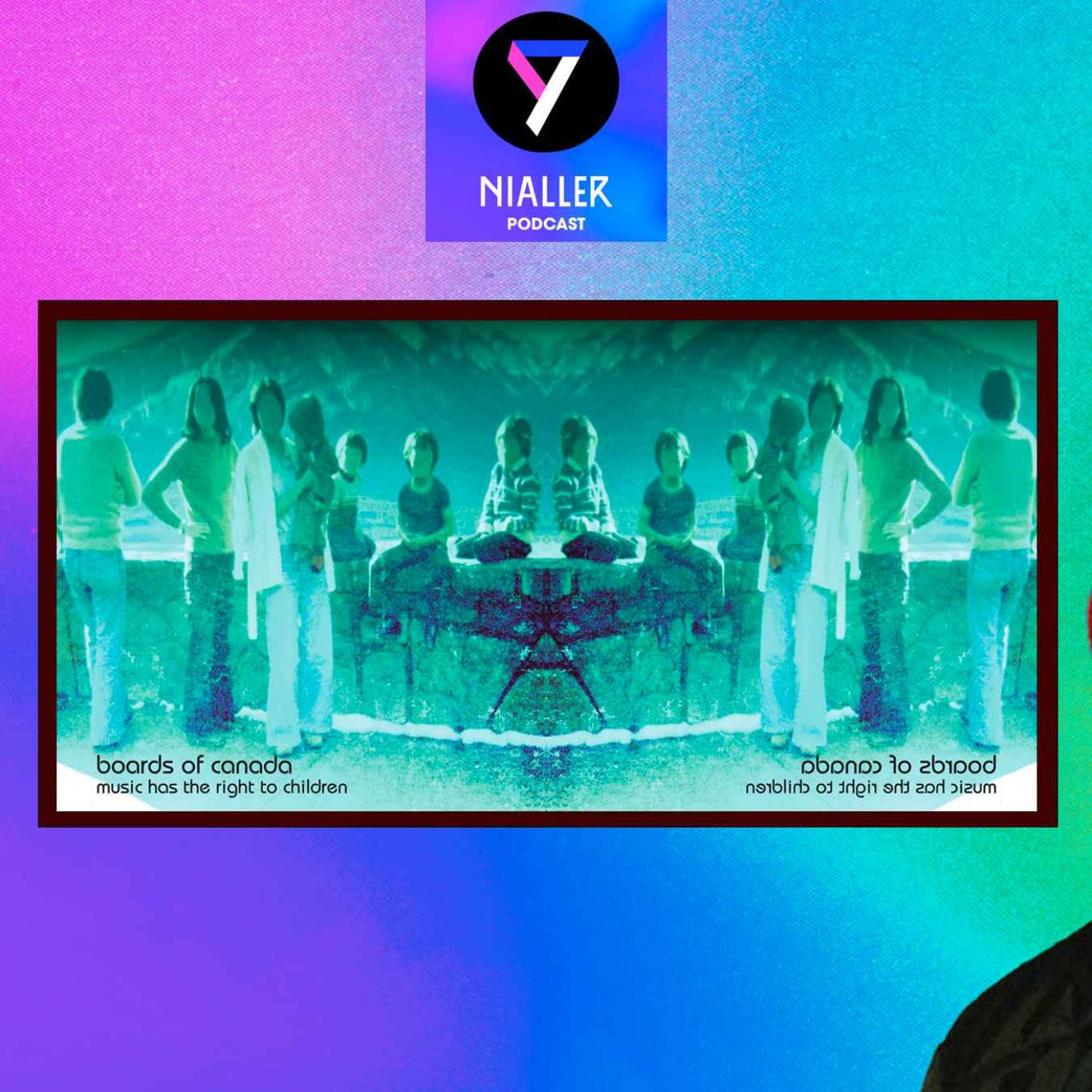
This is a repost ahead of the release of the new Boards Of Canada album Inferno this friady.
The Scottish duo's 1998 debut album is the subject of this month's Listen Closely podcast.
Boards Of Canada's debut album Music Has The Right To Children on Warp Records/SKAM is a modern classic, a highly evocative collection of music, operating like a fading childhood memory, a creeping nostalgic collage of analogue electronic music, samples from public service broadcasting programming, with inspirations from to hip-hop beats, ambient techno and psychedelia.
Join Niall and Andrea to discuss the liminal legacy of Music Has The Right To Children, and discover how library music, Sesame Street and nature documentaries all inform the album, and we chat about the album’s childhood nostalgia, and its preoccupation with a retrofuturistic nostalgia and memory.
* Support Nialler9 on Patreon, get event discounts, playlists, ad-free episodes and join our Discord community
Listen on Apple | Android | ACAST | Patreon | Pocketcasts | CastBox | Stitcher | Spotify | RSS Feed
Hosted on Acast. See acast.com/privacy for more information.

May 22, 2026
May 22, 2026
1hr 4 min
We gathered to listen through one of the most singular debut albums ever made. Here's the recording of the chat.
Niall is joined at our live listening event Listen Closely in the Big Romance by Cian Galvin aka Irish hip-hop producer and crate digger The Expert to discuss...
DJ Shadow - Endtroducing (1996)
A towering achievement in sample-based plunderphonics, music arrangements and turntablist-lead production techniques, DJ Shadow's 1996's debut album Endtroducing remains one of the most evocative and singular classic albums of recent times. Entirely built of obscure crate-dug samples using an Akai MPC60 sampler, Endtroducing's cinematic soundscapes finds a transportive space where emotionally resonant electronica and hip-hop meet - the middle ground between light and shadow. It is considered one of the best albums of all-time, and is certainly one of mine.
* Support Nialler9 on Patreon, get event discounts, playlists, ad-free episodes and join our Discord community
Listen on Apple | Android | Patreon | Pocketcasts | CastBox | Stitcher | Spotify | RSS Feed | Pod.Link
The third instalment of our loosely titled Plunderphonics series for the Nialler9 Listening Party brought us to a record that, thirty years on, still doesn't quite sound like anything else. DJ Shadow's Endtroducing, released September 16th 1996 on Mo' Wax, is a record built entirely from other records - and yet it sounds like nothing any of those records ever sounded like.
If you missed the night, the podcast recording is above. What follows is a bit of context and some of what we got into.
The trilogy so far
We've now done The Avalanches' Since I Left You and J Dilla's Donuts as part of this loose series. All three are sample-based records. All three feel like complete worlds unto themselves. There's something about the constraint of working entirely within found sound that produces a particular kind of magic - you're hearing music that was already forgotten being given an entirely new life, filtered through the taste and instincts of one person with a singular obsession.
Endtroducing is the most melancholic of the three. It's not a party record or a rap record in any conventional sense. It's a cinematic, introspective piece of work - breakbeats, jazz, psychedelia, hip-hop, all of it dissolved into something that feels like its own atmosphere.
The kid from Davis, California
Josh Davis grew up in Davis, California, then San Jose - both outside the main cultural centres, which is something he and Mo' Wax founder James Lavelle bonded over immediately when they first spoke by phone. Lavelle had grown up in Oxford. Both felt like outsiders to the scenes they were drawn to.
Shadow was experimenting with a four-track recorder in high school and DJing on the campus radio station KDVS at UC Davis before he'd made a single release. By 1993 he was part of the Solesides underground hip-hop collective alongside Blackalicious, Lateef, and Lyrics Born. Lavelle found him through a B-side remix on a forgotten hip-hop promo, tracked him down through a friend at Tommy Boy Records, and told him: "Don't worry about choruses and verses, just push your sound further."
That's more or less what he did.
The equipment
The entire album was made on an Akai MPC60 II, a pair of turntables, and an Alesis ADAT tape recorder that belonged to Dan the Automator. Shadow was 23 years old. The MPC could sample 2.5 seconds of stereo and store 13 seconds total. Everything on the record - the beats, the melodies, the percussion - had to be constructed within those limits.
Self-imposed limitation producing something that infinite digital possibilities probably couldn't. There's a reason we don't really get records like this anymore, and it's partly because the tools have become too open-ended. The seams and the constraints are part of what gives Endtroducing its particular texture.
The crates
Shadow spent his days in the basement of Rare Records in Sacramento, a shop with records piled to the ceiling. He found a mummified bat down there once. The cover photograph, taken by B+, shows producer Chief Xcel and Lyrics Born (in a wig) in that same basement. It's as good a visual summary of the album's ethos as you'll find anywhere.
He made it a rule to avoid sampling obvious or well-known material. The samples he pulled were largely from forgotten funk, soul, jazz, experimental, and sound library records - music that had no audience left and no commercial future. He rescued them. The liner notes credit everything, including the big clearance cases: Metallica, Björk, and the David Axelrod piano loop that anchors 'Midnight in a Perfect World'. Lavelle handled the clearances. "The samples were pretty easy to clear," he said. "It's different when you're sampling some Swedish drum break from 1970 than sampling James Brown."
The album itself
Endtroducing feels like a place. Not a collection of tracks but a world you enter at the start and leave at the end, slightly altered. The drums on 'Building Steam with a Grain of Salt', the disorienting loop of 'Changeling', the controlled chaos of the second half of 'Scatter Brain', the three-part sweep of 'Stem/Long Stem', the ache of 'Midnight in a Perfect World'. It's not a happy record. Shadow said himself that feelings of self-doubt and depression came through in the music during production. You can hear it.
The Wire's first ever review called it "a debut of melancholic mediocrity." Melody Maker said "you need this record. You are incomplete without it."
The bigger question
There's a clip of Shadow in the Rare Records basement that gets used a lot in discussions about Endtroducing. He gestures around at the records and says: "Almost none of these artists still have a career. Ten years down the line, you'll be in here." It's a bleak thought, but also the central one. Sampling asks us to reckon with music's ephemerality - but it also offers a counter-argument. These records survived because Shadow found them. Their sounds are in the album. They're still being heard.

May 14, 2026
May 14, 2026
1hr 13 min
This month's music selector guest is the NYC and Ireland music fan Lauren Kennedy, who went viral for her Track Star video last year.
Lauren Kennedy is the Athlone woman who has lived in New York for the last six years and is known for the viral video on the Track Star Youtube channel where she won $20,500 for correctly guessing all of the Irish bands selected for her on the show. Lauren very soundly donated all the money to the Palestine Children's Relief Fund. It was her second time on the show, after her first appearance where she was surprised by Bon Iver.
You may, like me have been following her gig escapades in recent months in NYC where she went to see a load of Irish bands who were over to play.
Lauren just moved back to Ireland for the summer so a perfect time to welcome this legend back to the country by catching up with the music she's loving at the moment.
Music discussed and chosen on the episode from Dove Ellis, Florence Road, David Kitt, Rua Rí, Shamrock Showband, The Last Dinner Party, Getdown Services, Crying Loser, Lemoncello and Fundido.
My Best albums of April piece.
Listen on Apple | Android | Patreon | Pocketcasts | CastBox | Stitcher | Spotify | RSS Feed | Podlink
* Support Nialler9 on Patreon, get event discounts, playlists, ad-free episodes and access our Discord community.

May 7, 2026
May 7, 2026
1hr 47 sec
Kate Nash is one of the most interesting artists working in British and Irish music right now.
You might know her from 'Foundations', the debut single that went to number one in the UK in 2007, or maybe winning a BRIT Award for Best Female Artist in 2008 or the excellent Netflix TV show GLOW on Netflix about female wrestlers.
But the Kate Nash of the last few years is an advocate for artists who kicks against the pricks of the music industry and the world at large.
In the last couple of years alone she has given testimony before a UK parliamentary select committee about the economics of touring, losing £26,000 on a European tour leg and covering those losses by selling photos of her arse on OnlyFans.
She's travelled around London on a fire engine visiting the offices of Live Nation and Spotify as part of her Butts for Tour Buses campaign. She is a patron of the Music Venue Trust speaking up for grassroots venues. She's been one of the founding members of the Featured Artists Coalition since 2009. She played the Trans Mission show at Wembley. She's been to Leinster House. She also released trans ally anthem 'GERM'.
Nash grew up in North Harrow going to Irish dancing at weekends, listening to Christy Moore and the Dubliners at home, spending summers in Ireland.
Last month, Nialler9 debuted her cover of Sinead O’Connor’s Famine - a song that serves as an introduction to her dual Irish English heritage.
So there is a lot to talk to Kate Nash about.
Listen on Apple | Android | Patreon | Pocketcasts | CastBox | Stitcher | Spotify | RSS Feed | Podlink
* Support Nialler9 on Patreon, get event discounts, playlists, ad-free episodes and access our Discord community.

Apr 9, 2026
Apr 9, 2026
1hr 4 min
This month's best of the month podcast guest is Manchester-based Irish BBC 6 Music presenter Deb Grant.
Deb started out with Jazz FM in Dublin before moving to the UK at 19 where now based in Manchester, she has been a regular BBC Radio 6 Music presenter since 2023, currently presenting the New Music Daily Fix show with Nathan Shepherd from Monday to Thursday from 7pm to 9pm.
Deb will be in Ireland over the coming months in her role as ambassador for Heineken Greenlight.
Music discussed and chosen on the episode from Angine De Poitrine, Wax Head, Avalon Emerson, Shortstraw, Baalti and Lapgan, Hannah Peel and Beibei Wang, Isa Gordon, Carol Maia and Jeremy Gustin, The Scratch and Rua Rí.
Plus Deb talks about being a judge on the Choice Music Prize, seeing Madra Salach in a tiny venue, and David Byrne's live Who Is The Sky? tour.
My Best albums of March piece.
Listen on Apple | Android | Patreon | Pocketcasts | CastBox | Stitcher | Spotify | RSS Feed | Podlink
* Support Nialler9 on Patreon, get event discounts, playlists, ad-free episodes and access our Discord community.

Apr 1, 2026
Apr 1, 2026
55 min
The 1998 album marked a turn for the trip-hop visionary band's to the dark side.
Niall is joined by Craig Fitzpatrick discuss the record in front of a live audience at at Listen Closely, our series of monthly album listening parties in the Big Romance.
Massive Attack - Mezzanine (1998)
The third album from the British pioneers radically reshaped the band's own bright trip-hop, soul and hip-hop with darker tones of electronic, industrial, and gothic distorted guitars.
Mezzanine eschews the band's trademark warmth for magnified atmospheres drawing on paranoia, negative space, and whispered vocals to create a mood that mirrored the anxieties of the digital age.
The album caused internal drama. The dark, guitar-heavy vibe of Mezzanine pushed the band into new territory, but it also led to major tension.
We revisit the record and talk about the band's career's highs, lows and live shows in The Big Romance with a live audience.
Listen on Apple | Android | Patreon | Pocketcasts | CastBox | Stitcher | Spotify | RSS Feed | Pod.Link
* Support Nialler9 on Patreon, get event discounts, playlists, ad-free episodes and join our Discord community

Mar 12, 2026
Mar 12, 2026
38 min
The debut album from Bloc Party remains a seminal record of a key time in UK guitar music.
Niall is joined by author and writer Dean Van Nguyen discuss the record in front of a live audience at Listen Closely, our series of monthly album listening parties.
Bloc Party – Silent Alarm (2005)
Bloc Party’s debut album quickly became a seminal indie record of the 2000s with big frenetic indie zeitgeist hits like ‘Helicopter’, ‘Banquet’, ‘This Modern Love’ and ‘Like Eating Glass’.
Silent Alarm presented a poppy spin on taut post-punk, edgy pop and alternative ballads, with Kele Okereke’s lyrical explorations of matters of the heart, modern anxieties, intimacy and alienation.
Silent Alarm felt like a manifesto. It bridged rock and dance culture before LCD Soundsystem and others made that fusion mainstream. We discuss its beginnings, its impact, what came after for the band and some recommended further listening.
We revisit the record in The Big Romance with a live audience.
Dean's book about Tupac is recommended.
* Support Nialler9 on Patreon, get event discounts, playlists, ad-free episodes and join our Discord community
Listen on Apple | Android | Patreon | Pocketcasts | CastBox | Stitcher | Spotify | RSS Feed | Pod.Link

Mar 4, 2026
Mar 4, 2026
1hr 3 min
This month's best of guest is Cork pop culture writer Mia Tobin Power who joins Niall for episode #309.
In the recommendations corner this month are albums from Mitski, Cardinals, Charli XCX, Archive, Jill Scott, Vegas Water Taxi, Puma Blue, Nashpaints and David DeBarra. Plus a song from new Cork band Maicín.
Plus some chat about the phenomenal Industry Season 4 and some other films and TV we've enjoyed this past month.
I wrote about my choices here this week.
Follow Mia on Substack.
Listen on Apple | Android | Patreon | Pocketcasts | CastBox | Stitcher | Spotify | RSS Feed | Podlink
* Support Nialler9 on Patreon, get event discounts, playlists, ad-free episodes and access our Discord community.

Feb 18, 2026
Feb 18, 2026
37 min
It's been a whirlwind of a week for Dublin nightlife enjoyers.
Last Friday, it was reported that newly refurbished Dublin hotel The Hoxton (formerly The Central Hotel) sought an High Court injunction over noise bleed issues against its adjoining late night restaurant and night club space Yamamori Izakaya while it plans to open its own nightclub.
Both parties are in disagreement over what has taken place in attempts at dialogue. In the meantime, a protest took place last night outside the hotel, which showed people's clear frustration with the threats put upon Dublin's cultural and arts spaces.
Dublin folk musician and People Before Profit Dublin Central candidate Eoghan Ó Ceannabháin spoke at the protest last night, and was part of a Stand Up For The Arts public meeting in The Cobblestone afterwards.
Eoghan spoke to me about the broader implications of government policies that prioritise corporate interests over cultural preservation, he emphasises the need for grassroots movements to protect and advocate for the arts.
The chat highlights the importance of community engagement, the untapped potential of publicly funded cultural venues and the recent failure of the government to save The Complex.
Listen on Apple | Android | Patreon | Pocketcasts | CastBox | Stitcher | Spotify | RSS Feed | Podlink
* Support Nialler9 on Patreon, get event discounts, playlists, ad-free episodes and access our Discord community.

Feb 6, 2026
Feb 6, 2026
26 min
The Best of the Month episode is Patreon-only. This is a preview on the public feed.
This month's best of the month guest is music writer Vanessa Roulston Mooney.
We pick our favourite music of the first month of the year, from midwest desert post rock of Winged Wheel, new releases from Irish artists Maria Somerville, Madra Salach, Ailbhe Reddy, Ye Vagabonds and Caitlin Orla Eve, the cosmic collab between Julianna Barwick and Mary Lattimore, the Norwegian artist Sassy 009, the "Britainicana" band Westside Cowboy and Chicago experimental trio Bitch Bajas.
We also talk recent gig experiences and the Choice Music Prize Irish album of the year.
Follow Vanessa on Substack.
The These New Puritans interview Vanessa did for us.